January 31, 2026.
The influence of preexisting or underlying structural features or framework on the development of sedimentary processes, depositional pathways, and facies distribution is well known and documented in various research articles / literatures.
It is an important concept for hydrocarbon exploration and forms a piece of work that must be established and understood very early on in the exploration work for a basin. The understanding is key for identifying reservoir fairways, amongst other key elements of the petroleum system. Surprisingly, the application of this concept is often missing or not accounted for in some hydrocarbon exploration workflows (either at the play level or at the prospect level).
For a successful exploration campaign, the role and influence of preexisting structures must be understood and mapped out in a 3D sense. The resulting piece of work and the associated subsurface products must then be incorporated into play evaluation – (highgrading or downgrading play areas), and prospect risking… this is especially true for plays that have been significantly controlled by rift-related structural features (syn-rift plays), i.e. Jurassic plays of the North Sea Basin. Note: Rift movements often exploit preexisting deep seated structures, resulting in reactivations of those structures.
Methodology – the technique combines a number of subsurface products including structural maps, stratigraphic layout, isopach maps, , etc to identify sedimentary processes, depositional pathways, and facies distribution in the area of interest. The products from this technique can be used to validate/verify other reservoir prediction methods (I.e. seismic-based).
Recent Applications – (1) I have used this technique for highgrading / downgrading areas within play maps. (2) I also apply this technique / concept for prospect review work, and (3) as part of the elements in my well prediction toolbox🧰 for exploration wells. Specifically, this technique was used for reviewing two recent exploration prospects / wells. The two exploration wells were drilled in the last 2-3 years.⤵️
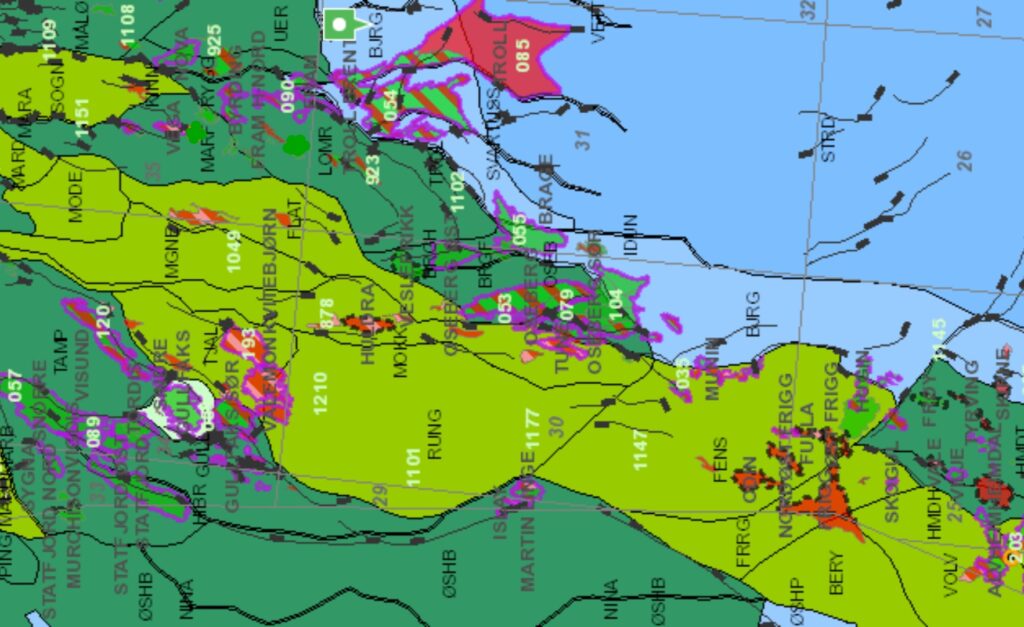
Case study 1 – Late Jurassic exploration wildcat well, drilled rece in the South Viking Graben area of the NCS. Using the technique described above, I evaluated that the well was located in what was likely a sediment bypass zone or with very poor reservoir, that’s mud dominated. On completion, the well failed to encounter any reservoir facies and was dry as predicted.
Case study 2 – Wildcat well was drilled in the Norwegian Sea, targeting a Cretaceous play. The technique identified that the well was located in an area that’s not favourable for the deposition of thick reservoir facies (also suppored by nearby wells). Regional depositional context for the area indicated that the well was sitting in a setting dominated by thin reservoir sands that get increasingly silty upwards. On completion, the well failed to find reservoir facies… thin, silty facies found in targeted interval.
In summary, these two cases clearly demonstrate how expensive dry wells could have been avoided. As described above, this technique / concept is useful at the play level and at the prospect level. At the prospect, it’s vital for evaluating and verifying other reservoir prediction methods (I.e. seismic) that are used in prospect evaluation/maturation work.
For more details on the described technique, case studies and applications on the NCS, and the well prediction toolbox 🧰,.. Contact – consulting@ytfexploration.com.
Tags: #NCS, #Exploration, #ReservoirPrediction, #PlayFairway, #JurassicPlays, #Prospectivity. #ProspectEvaluation