➡️ Plays: The Cretaceous, Paleocene, and Eocene plays within the Central Graben area of the Norwegian North Sea are underexplored and hold significant Yet-To-Find (YTF) resources. That is one of the reasons why I included them as one of my recommended plays for APA 2025. Recently, I have identified various play opportunities, highgraded areas, and Leads with potential for significant oil discoveries. These shallow target plays are mostly present as deepwater turbidite reservoirs embedded in Marlstones. There are also some areas where they are present as sand injectites play. Some of these plays extend west into the UK Central Graben, and south into the Danish Central Graben where they’ve been proven with discoveries. An example is the Paleocene “Borr” Member sandstones play which has been proven in the Danish North Sea and was recently targeted and proven in Othello discovery by DNO Norge AS in the Sogne Basin within the Central Graben area of the NCS (Figs. 1 and 3).
➡️ Source Rock Kitchen and Migration Pathways: These shallow-target plays are supported by a proven, working source rock kitchen. Analysis of available data shows that a significant amount of oil and gas are yet to be found, especially when you compare the estimated total generated by the source rock kitchen with total discovered. As previously mentioned, some of these plays extend south into the Danish North Sea, where discoveries have been made. Deep-seated, syn-rift growth faults that propagate up-shallow provide migration pathways for generated hydrocarbon fluids. Both vertical and lateral migration are viable and there’s no need for long distance migration. Notably, there are indications of “charge flags”, observable on available seismic data… where they appear to occur in geobodies above deep-seated faults.
➡️ Geophysical Mapping: The geophysical mapping and analysis scenario is good (reservoirs are encased in Marlstones). The Sonic log signature associated with top of the reservoir shows a clear acoustic difference between the reservoir and overlying rock unit, such that the seismic-to-well tie is good and seismic modeling is also reliable. The clear reflection coefficient associated with top of the reservoir results in an identifiable reflection event which is mappable and extensive.
➡️ Trap Styles: Trapping mechanisms can be structural, stratigraphic, or both. For Cretaceous and Paleocene plays, – compaction features / mounded features provide clues to reservoir fairways and reservoir prone areas. Low-relief anticlinal structures are commonly featured in the shallow Cretaceous and Paleocene exploration intervals. The observed anticlinal traps are compaction-related, and in some cases, related to late rift movements. Stratigraphic traps are also present within this shallow play interval. For Jurassic targets, they are commonly featured as fault dependent and fault-assisted traps. Wedge-shaped traps are also possible as significant growth / thickening is observed along the Coffee Soil Fault Complex (CSFC). Sandwiched between Mandal High on the west and the Coffee Soil Fault Complex on the east, this part of the Sogne basin is located in good spot for sediment routing (Fig. 1). This part of the Coffee Soil Fault Complex is characterised by a change in fault-trend direction, which is accommodated by a series of fault relays / relay ramps…that must have been exploited by sedimentary processes to route and deliver sediments from the intra-basinal highs/flanks into the basin at various stages in the past.
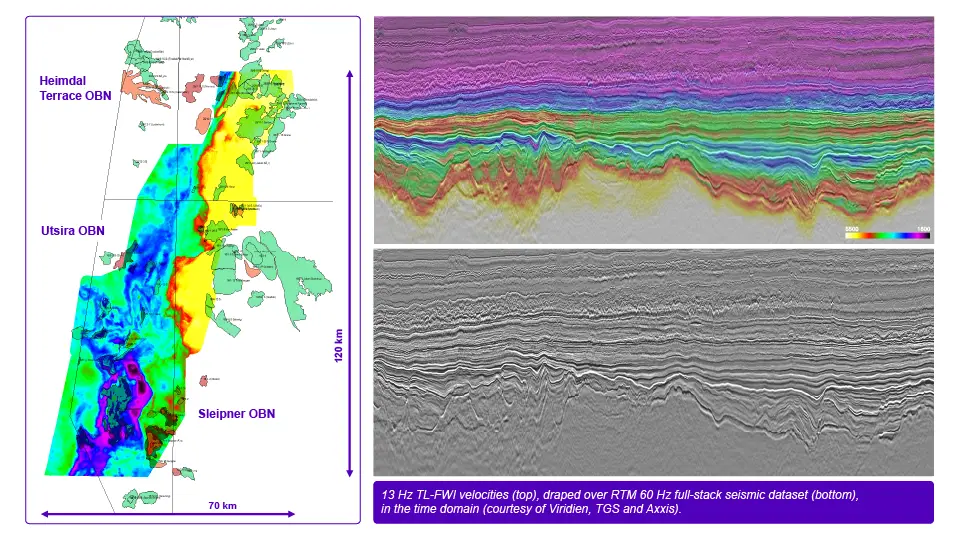
➡️ Summary – Perhaps one of the reasons why these Central Graben Shallow plays have not been actively pursued and targeted within the NCS is due to seismic data quality and velocity model. Seismic data quality has improved and velocity modeling is better, so I would expect explorers to get more and more interested. I was in a meeting in January, where I also discussed these shallow plays as “underexplored and viable play opportunities” within the Norwegian North Sea…they represent the upside in a North Sea Basin that’s getting more and more mature.
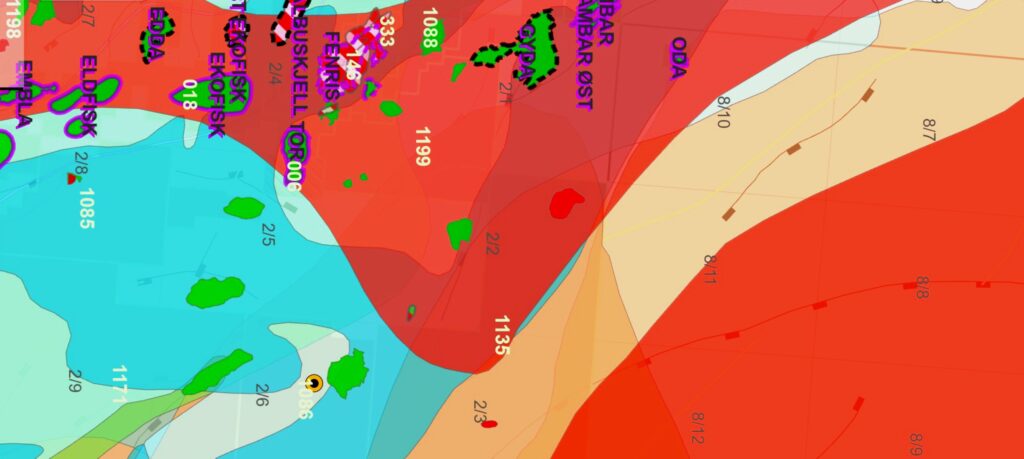
And if you’re not yet convinced, take a look at the included figure (Fig. 2) showing DNO’s new licence awards from APA2024… look at DNO’s licence awards in the Central Graben/SNS area and also take note of the amount of interest held by DNO in each of the blocks. As soon as I saw this back in January, I knew DNO “was onto something”,.. I knew it was a bet and (having worked this area before) I knew it was most likely a bet on the viability of shallow plays in the area …as well as the possibility of staking them with Late Jurassic play…. (check my comments on DNO in my LinkedIn post summarising the APA2024 awards).
Fig. 1. 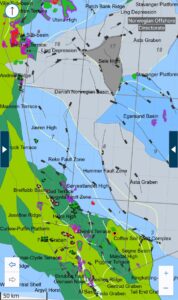 Fig. 2.
 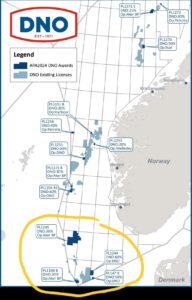 Fig. 3.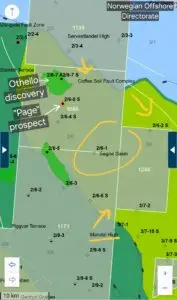
➡️ Finally, it’s exciting to watch the currently drilling “Page” prospect (Fig. 3) in anticipation of a discovery being made, but if it turns up to be dry, that would not change the play viability… as the play is proven and the prospectivity is regional. Perhaps I should also add this in closing, – “this is a play with strong cross-border exploration theme,.. it may be beneficial to have a cross-border or regional perspective to review what has been found in other places, including reservoir time-equivalents and sediment provenance”.
➡️ Contact me to discuss more details and supporting data, play maps and highgraded areas, and identified lead opportunities – “consulting@ytfexploration.com”.
➡️ My LinkedIn post and comments on DNO’s licence awards – APA2024 Licence Awards
Tags: #NCS #Exploration #Plays #Prospectivity #Playfairway #Paleocene #Eocene #Cretaceous #Deepwaterturbidites #ILXexploration #ShallowTargetPlays #Leting #Letebrønner #Leteaktivitet #Norskoljeoggass #NorwegianContinentalShelf #NorthSeaCentralGraben #NorthSeaExploration
Featured…